Twenty printed pages  ·  Once a month  ·  Circulation: one

He was never going to be on Facebook.
He is always at the mailbox.

Everything he'd see if he were on there — the grandkids this month, what your sister has been up to, how his team did, what's happening back home. We gather it, print it as a real magazine, and mail it to him with his name on the cover. Nothing to download, nothing to log into, and no thread to scroll.

Join the beta $29 a month, or $315 a year
First 50 families
The

Paper
Route

No. 1September 2026
Norman on the top deck of a harbour cruise boat, holding up a glass of Coke

Seven at Ray's Boathouse

  • The Visit  Lynn and Ronnie's week in Seattle
  • Baseball  A championship ring in Everett
  • Back Home  A billion dollars for the Brighton Beach boardwalk
For NormanCirculation: one
20 pages, every issue
12 issues a year
0 apps for him to learn
10 min of setup, once

You already know the problem

Staying in touch shouldn't require him to change.

01

You text him a photo of the grandkids. It lands, he can't quite open it, and by Thursday it's buried under a pharmacy reminder.

02

Your sister has the good pictures. Your uncle has the good stories. Neither of them is going to sit down and write anything.

03

The tablet you bought him is in a drawer. He reads the paper front to back every morning at the same table.

04

You call on Sundays and run out of things to say by minute four, because you're both trying to make this week sound like something.

How a month goes

You spend ten minutes once. We handle the other eleven months.

The work of a family magazine isn't the printing. It's getting your aunt to actually send something. That's the part we do.

1st We ask

Two asks go out by text and email to the people you named: one photo from the month just gone, and one question written around his life.

2nd–18th Answers come back

They reply however they want. A text. A thirty-second voice note from the car. A photo of a photo from a shoebox. No app, no account, no password.

20th You look it over

The issue is laid out and waiting in your inbox. Fix a spelling, pull a page, or ignore the email entirely and it ships as it is.

26th It arrives

Twenty pages on matte paper, stitched at the spine, large type throughout, addressed to him. Not a package. Mail.

What fills twenty pages

Half of it is this month. The rest is the good stuff nobody's told him in years.

A month of family news isn't enough to carry a magazine on its own, and pure nostalgia gets old by issue four. Every issue pulls from three places, in the same proportion, every time.

From your family

Pages 4–9 · about a third of the issue

The photos that would have been a post. Printed big, captioned with who, where and when, with everyone named in full.

  • Grandkids: games, plays, report cards
  • Trips, moves, new jobs, new babies
  • A letter, in someone's real handwriting
  • Drawings and notes from the little ones

From his world

Pages 10–13 · about a quarter

The things he'd bring up at the counter if he were still going down to the counter. Written plainly, in large type, no jargon and no scrolling.

  • His team's month, results and what's next
  • The month's news in eight plain sentences
  • His hometown paper, boiled down to a page
  • Whatever he's followed for forty years

From his life

Pages 14–18 · the rest

The deep stuff, which is also the material that stays reachable longest when recent memory starts to go.

  • A place he's connected to, four pages
  • The year he was 22, and what it cost
  • Phrases he's used for forty years
  • A recipe in the handwriting it was written in

From issue No. 1

September, for a man who doesn't have a feed.

On the left, what his family sent in this month. On the right, the month back home he'd have been following anyway. Everyone is named in full every time, and no caption ever asks him a question he could get wrong.

The Paper RouteSeptember 2026

At Home

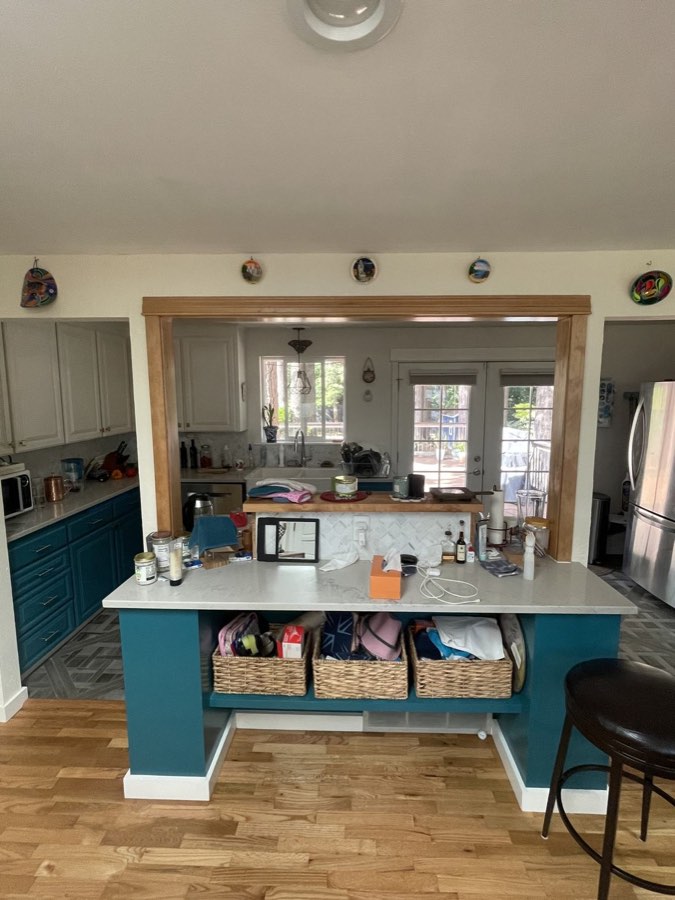
Brian's Path to Carpentry

The kitchen island before the work, in grey and white
Before.
The kitchen island after the work, in deep teal with a new counter
After.

Brian spent the month on the house. He rebuilt the staircase down to the basement, then turned around and redid the kitchen island. The stairs alone took a few weeks.

Nobody taught him any of this. He worked it out as he went, which is the hard way and also the only way it sticks.

A newly rebuilt oak staircase with turned balusters
New treads, new stringers, new railing.
8
Back HomeSeptember 2026

Back Home

Rebuilding the Brighton Beach Boardwalk

The Riegelmann Boardwalk runs two and seven-tenths miles from Coney Island through Brighton Beach. It was already old when you were walking it as a boy. It is a good deal older now, and for years it has been quietly coming apart.

Neighbours report broken planks, exposed screws and holes wide enough that people have taken to standing garbage cans over them as warnings. This past July a group walked the Brighton Beach stretch planting orange flags at every hazard they could find, which is a very Brooklyn way to file a complaint.

In December the city committed more than a billion dollars to rebuild the whole thing.

All 2.7 miles, in phases, with new pilings and utilities underneath and some stretches raised against the water. The argument now is over wood. It has been a wooden boardwalk for a hundred years and the families who run the rides want it kept that way.

The Cyclone is 99 years old and still opens every season with an egg cream.

10

The shape of every issue

Same twenty pages, month after month.

The structure never moves, so the object becomes familiar and he always knows where the family tree is. Only the contents change. Tap a page.

The asking

Nobody writes a paragraph when you ask "any news?"

So we don't ask that. Every question goes to one specific person, about one specific thing, and can be answered standing in a parking lot. Some months we're asking what just happened. Some months we're asking about 1965.

To his daughter-in-law

"Send one photo from this month. A game, a dinner, a driveway, anything."

"We took Dad out on the Argosy cruise with Lynn. He ordered a Coke on the top deck and let me photograph him holding it up."

To his son

"Anything happen this month he'd want to hear about first?"

"Elliott's travel team won the whole tournament up in Everett. There are rings. He was standing right there in a Magnolia cap."

To his other son

"Send one photo of something you built or fixed. We'll ask about it next month."

"Rebuilt the basement staircase and redid the kitchen island. Nobody taught me any of it, I just worked it out."

To his sister

"What's something he did that drove you crazy at the time and is funny now?"

"He'd order a Coke anywhere, at any hour, without once looking at the menu. Still does."

To an old colleague

"What was he like to work alongside? Thirty seconds of voice note is perfect."

"Every man at this lunch table audited with him at the GAO. We called him partway through and passed the phone around."

To a cousin who stayed east

"What's the one place from back home he'd want news of?"

"The boardwalk, without a doubt. He walked Brighton Beach as a boy and he still asks about it."

Who it's for

Adult children doing the remembering for everybody.

Usually one person in a family is the one who calls, drives, and keeps track. The Paper Route is built to take that job and split it across everyone else, one question at a time.

The one who calls on Sundays

You make the calls, drive up, and keep track of the appointments. Most of that job can't be handed off. This part can: we split the remembering back out across everyone else, one question a month at a time, and you don't have to chase any of them.

The sibling with the good photos

They have the pictures and the stories, and they are never going to write a paragraph, join a group, or download anything. They get one text about one specific thing. Thirty seconds of voice note from the car counts as an answer.

Whoever is sitting with him

An aide, a nurse, a grandchild on a Tuesday afternoon. Page 19 is written for them rather than for him: five things to bring up, two from this month and three from his life. It's the page that gets used most.

Beta pricing

One price, twelve issues, held for as long as you stay.

Monthly

$29 / month

Cancel any time, including mid-issue.

  • Twelve 20-page issues a year
  • His team, his hometown and the month's news, every issue
  • One printed copy, mailed anywhere in the US
  • As many family contributors as you want
  • Every issue kept online for the family
Save 10%

Annual

$315 / year

Save 10% by paying annually. That's $26.25 a month.

  • Everything in monthly
  • A second copy of each issue for a sibling or the care staff
  • Beta price honoured for life
  • We build issue one with you, on the phone

Beta is capped at 50 families so we can call every one of you. US mailing addresses only for now. If an issue arrives damaged or wrong, we reprint it and you don't pay for it.

Join the beta

Tell us about him. That's the whole setup.

Four screens, about ten minutes. Everything here becomes the brief the questions get written from, so one specific detail beats ten general ones. You can add more any time.

1 · You
2 · Him
3 · His world
4 · Who to ask

First, you.

This is your account. He never sees any of it, and he never gets a bill.

Add your name and a working email, then pick a plan.

Who is the magazine for?

Put the name his friends use on the cover, not the one on his insurance card.

We need at least his name and a mailing address.

What does he care about?

Two kinds of things: what he'd have checked every week if he still could, and what he's told stories about for forty years. Write it the way you'd tell a friend, not the way you'd fill out a form.

Tell us at least one thing about his world.

Who should we ask?

Three people is enough to start, six is better. Each gets one short question a month and can answer by text, voice note, or email. Their first message says who added them and how to stop.

Add at least three people, each with a phone number or an email.

You're on the list.

We'll email to confirm the details and set up payment before the first question goes out. Issue one gets built by hand, with a phone call, because that's how we learn what to ask.

Before you ask

The questions we get.

Does he need a phone, a tablet, or a login?

No. Nothing about this touches him digitally. He gets an object in the mail with his name on it. The only people using their phones are the ones sending stories in, and they're just replying to a text.

Will my family actually reply?

That's the whole thing we built. One question, to one person, about one specific thing, answerable in thirty seconds without opening an app. If someone goes quiet two months running we stop asking them and ask you for another name instead.

Does the AI make things up?

It doesn't invent facts and it never guesses who's in a photograph. It takes what people actually send and sets it in the house voice. Names, dates and relationships come from you and from the person who sent the photo. You can read any issue before it prints.

Where do the sports and news pages come from?

We write them. Results and standings are facts, so we pull those from a sports data feed and put them in a box he can read at a glance. The news pages and the hometown page get written in plain sentences from what actually happened that month. We don't reprint articles and we don't run photographs we don't have the right to run.

He has dementia. Is this a good idea?

He's who we built it for. Captions are written as statements, never as quizzes, so there's nothing in the issue he can fail. Everyone is named every time with their relationship attached. Page 19 is written for whoever is sitting with him rather than for him, and it's the page care staff use most.

What if it's a thin month and nobody sends much?

The issue still ships at twenty pages. Roughly half of it doesn't depend on anybody replying: his team's month, the news pages, the hometown page, the era feature and the recurring pages all get built from his dossier. Family photos are the part we have to ask for, and a thin month there just means the other pages run longer.

Can more than one of us pay for it?

Not yet, but it's the request we get most. For now one person subscribes and everyone else contributes for free. Split it however you like on your end.

What happens to the issues afterward?

Every issue stays in your family archive online, and at the end of the year you can order all twelve bound into one volume. Families tend to want that copy more than they expect to.